

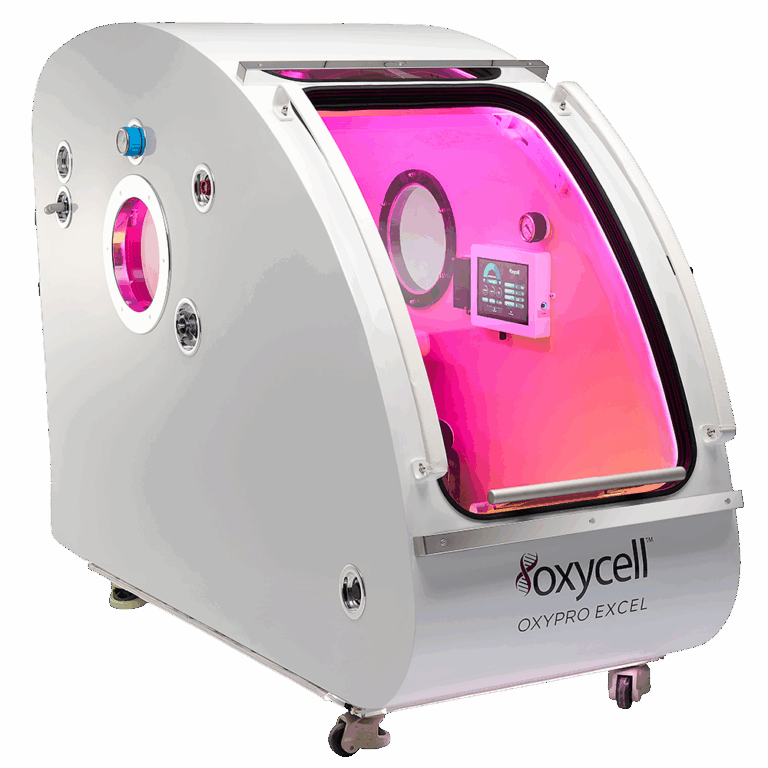
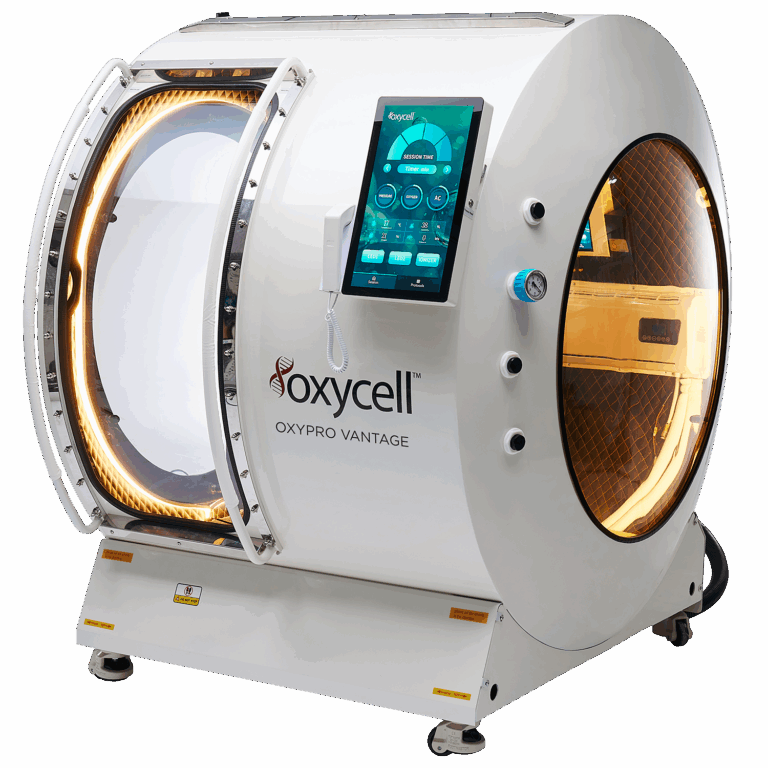
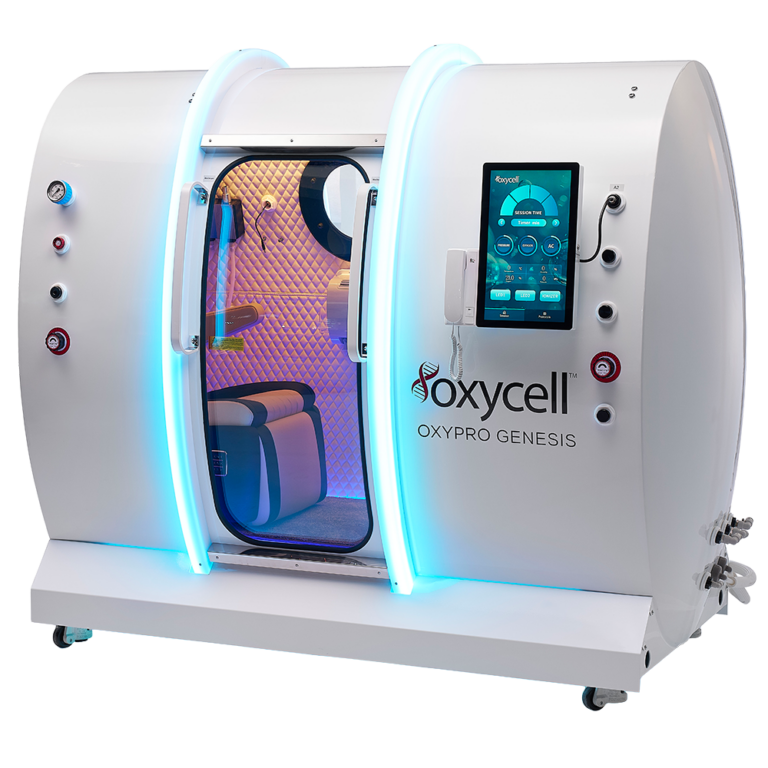
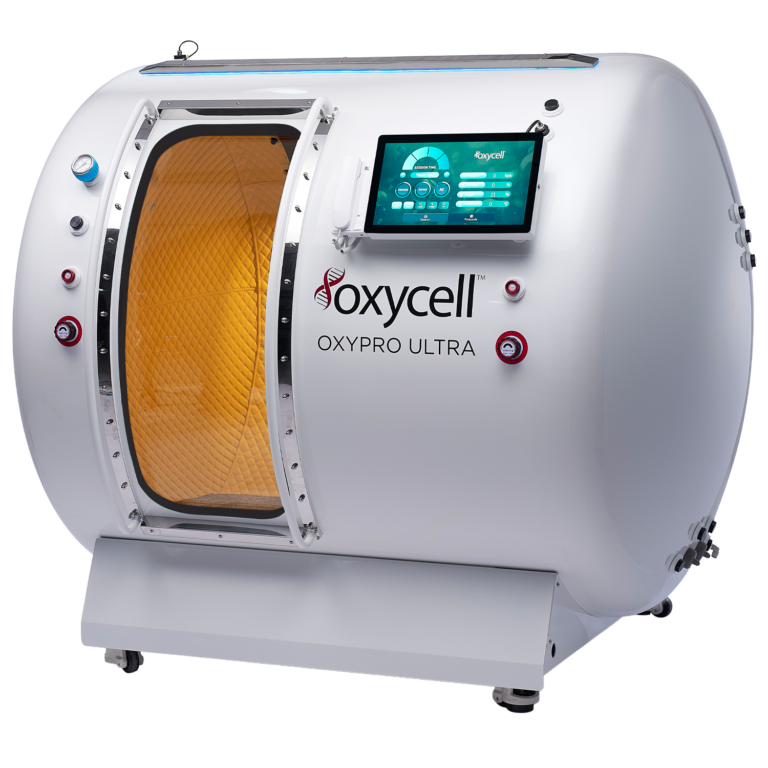
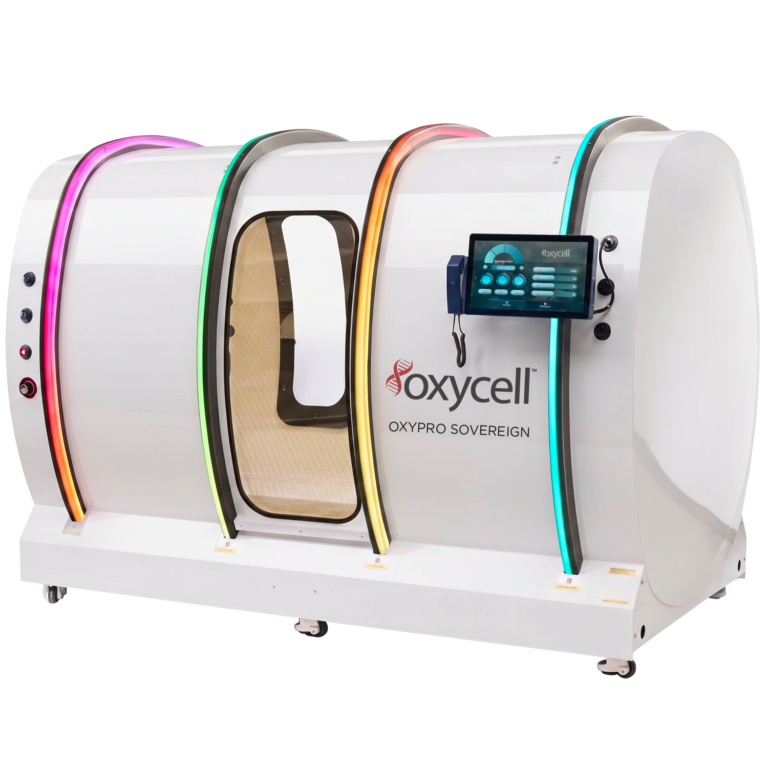
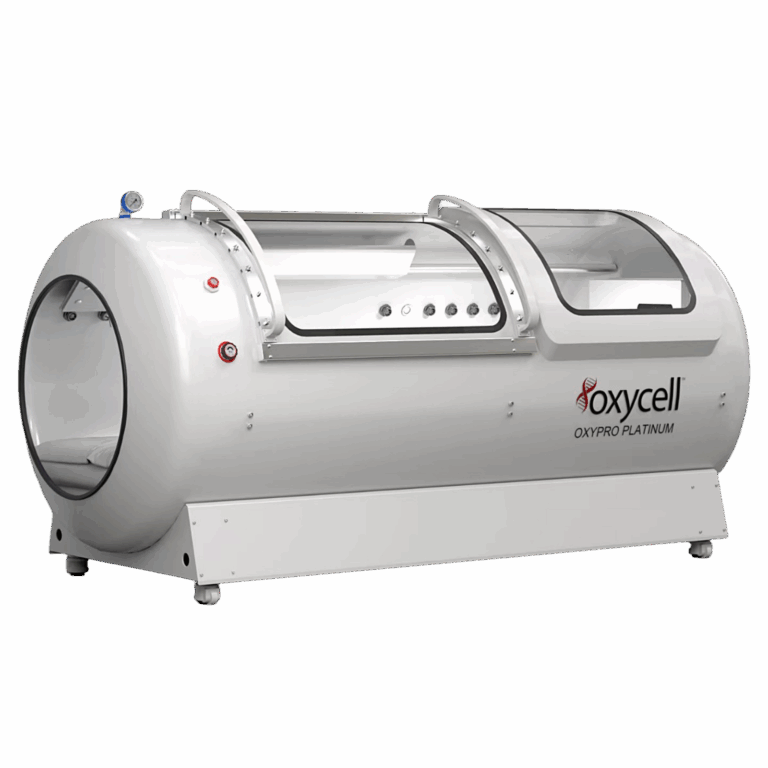
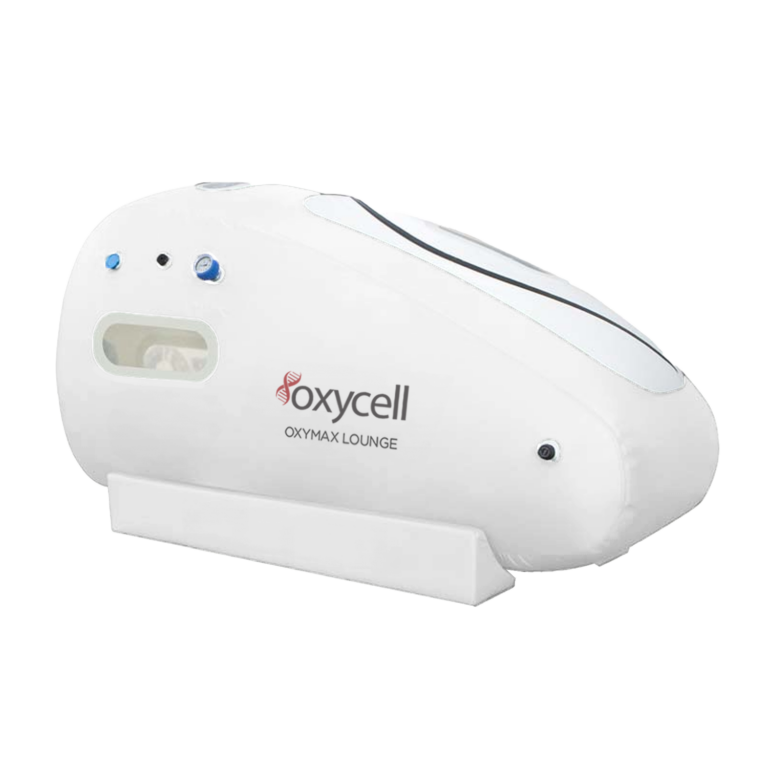
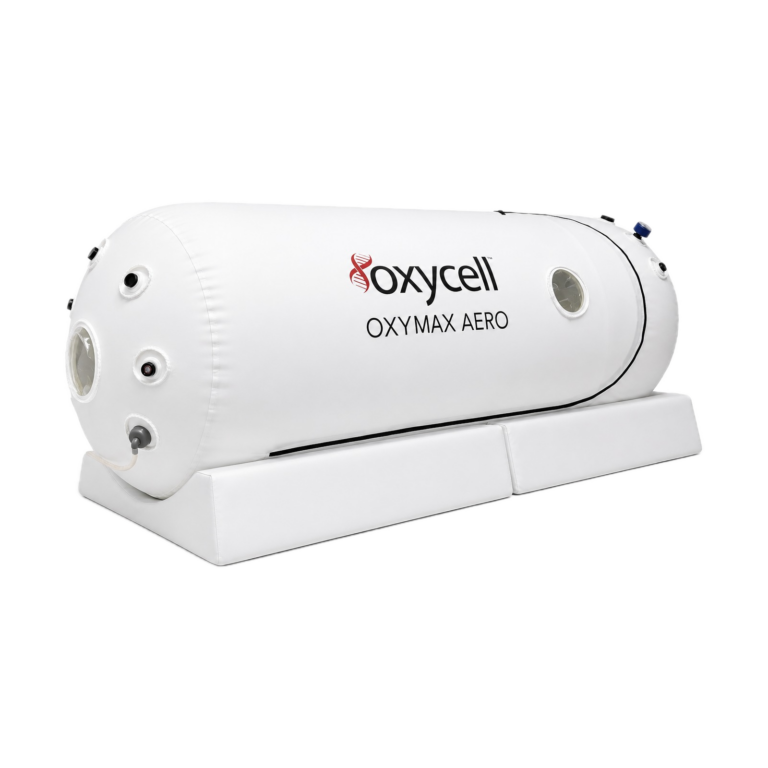
The chamber
A pressure vessel — engineered to ASME standards — raises ambient pressure above 1.0 ATA, the same physics divers live by.
Pressure changes what oxygen can do. Scroll to dive into the science of hyperbaric oxygen therapy — from first principles to the frontier of enhanced medicine.
At sea level — 1.0 ATA — your red blood cells are already ~97% saturated. Hemoglobin is nearly full, and your plasma carries almost no oxygen at all. This is the ceiling of normal.
Inside a hyperbaric chamber, ambient pressure doubles while you breathe up to ~98% oxygen through a sealed mask. The rules of gas exchange begin to change.
Henry's law: gas dissolves into liquid in proportion to pressure. Under hyperbaric conditions, oxygen physically dissolves into blood plasma — reaching tissue that hemoglobin alone can't serve.
Hyperbaric oxygen therapy is one idea executed precisely: more oxygen, under more pressure, for a measured time.
A pressure vessel — engineered to ASME standards — raises ambient pressure above 1.0 ATA, the same physics divers live by.
A concentrator delivers up to ~98% O₂ through an inhale-activated mask, while exhaled CO₂ is vented outside the chamber.
Protocols typically run between 1.3 and 2.0 ATA. Pressure is the active ingredient — it's what moves oxygen into plasma.
85–110 minutes depending on the protocol, fully monitored, often in courses of 20–60 sessions.
*Approximate physiology of dissolved plasma oxygen breathing ~98% O₂ at 2.0 ATA versus air at sea level.
The frontier of hyperbaric research isn't just delivering more oxygen — it's fluctuating it. Protocols that cycle oxygen up and down appear to signal the body's own regenerative machinery, the way altitude signals an athlete's blood — without the hypoxia.
"The fluctuations in oxygen delivery, rather than oxygen itself, trigger the regenerative cascade."
— the hyperoxic-hypoxic paradox, as described in peer-reviewed literature led by Prof. Shai Efrati's group (Sagol Center for Hyperbaric Medicine, Tel Aviv)

Randomized and controlled trials from the Sagol group have studied HBOT protocols in post-stroke and post-concussion cognition, reporting changes in brain metabolism and function.

A 2020 prospective trial reported telomere lengthening and reduced senescent-cell populations in older adults following a 60-session protocol — aging hallmarks, measured in blood.

Research in healthy adults and athletes has examined mitochondrial function, VO₂, and cognitive performance under repeated hyperbaric protocols.
We compile the peer-reviewed literature on hyperbaric oxygen — the established indications and the active research frontier — in readable form, with links to the primary sources. We report the research; we don't make medical claims.
Fourteen uses are cleared in the U.S. — including decompression sickness, carbon-monoxide poisoning, select non-healing wounds, and radiation tissue injury.
View on PubMedSystematic review of HBOT for late radiation tissue injury reports improved outcomes for selected sites.
View on PubMedReviewed trials examine HBOT as an adjunct for chronic diabetic wounds and amputation risk.
View on PubMedRandomized crossover trial reported neurological improvements in post-stroke patients at late chronic stage.
View on PubMedRandomized trial studied persistent post-concussion symptoms after mild TBI, reporting cognitive and imaging changes.
View on PubMedRandomized controlled trial in healthy older adults reported improved attention and processing speed after an HBOT course.
View on PubMedProspective trial reported telomere elongation and reduced senescent T-cells in older adults after 60 sessions.
View on PubMedReview describing how intermittent hyperoxia can induce regenerative responses typically associated with hypoxia.
View on PubMedTrial in athletes examined aerobic capacity and mitochondrial respiration across an HBOT protocol.
View on PubMedStudies examine HBOT in soft-tissue injury and post-exertion recovery in sport.
View on PubMedProspective crossover trial reported symptom and brain-imaging changes in women with fibromyalgia.
View on PubMedRandomized sham-controlled trial studied persistent post-COVID symptoms after 40 HBOT sessions.
View on PubMedThese statements have not been evaluated by the FDA. This content compiles published research for education only; it is not medical advice and Oxycell products are not intended to diagnose, treat, cure, or prevent any disease.
Every OxyPro chamber runs clinically-informed protocols through OS/O₂™ — the science above, made one-touch simple.